
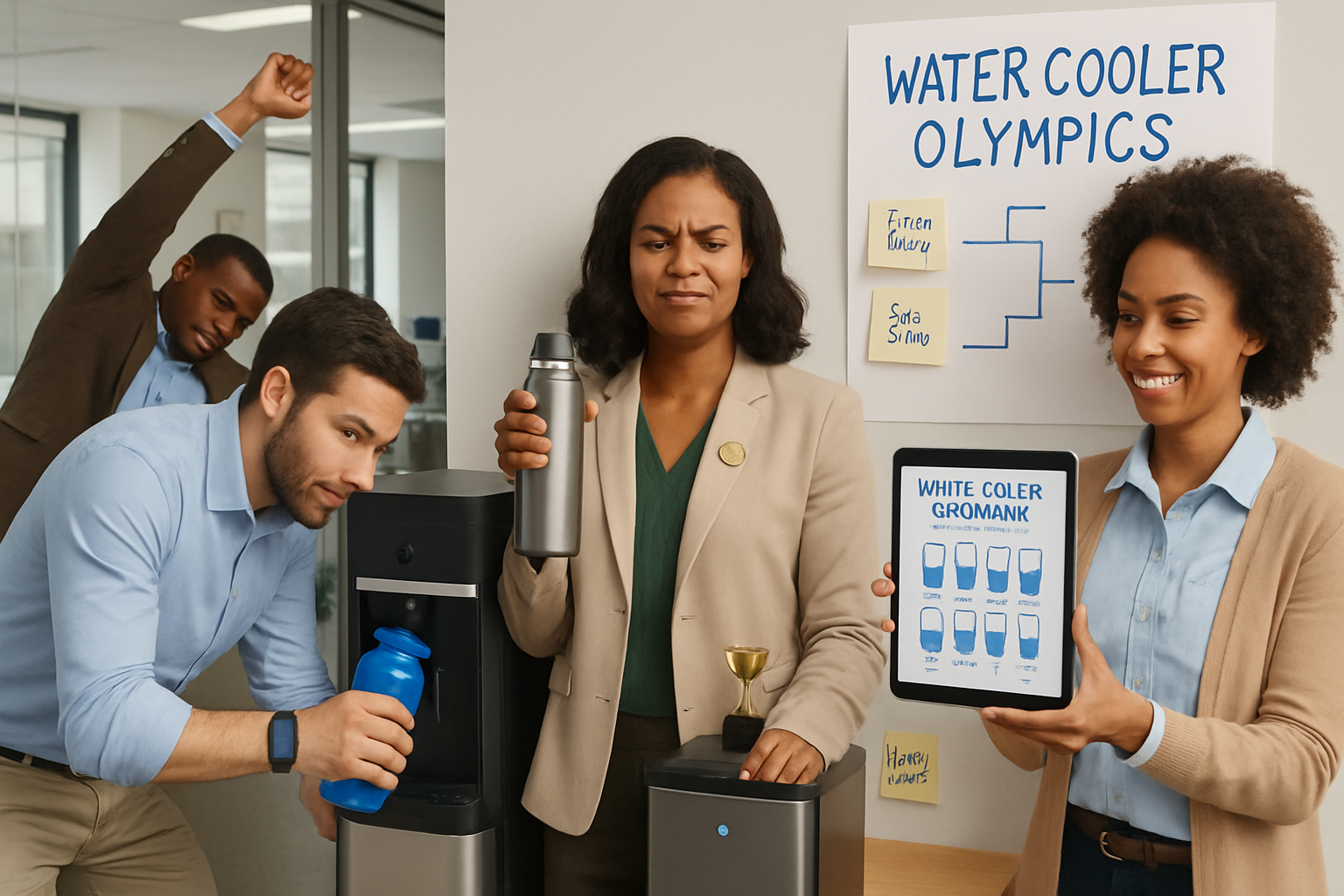

If your office can turn fantasy football, step counts, and “who replied all?” into a blood sport, it can absolutely turn drinking water into a small-scale international event. And honestly, it should. A workplace hydration challenge is one of the rare corporate ideas that is funny, cheap, low-risk, and surprisingly useful. It boosts focus, steadies energy, nudges productivity in the right direction, and gives your most competitive colleagues something to obsess over that is less destructive than spreadsheet formatting wars. Welcome to the Great Water Cooler Olympics: a slightly ridiculous, genuinely practical way to help a team drink more water without turning the office into a wellness cult. Because yes, hydration matters. And yes, if handled correctly, it can also be office comedy with measurable benefits. That is the Jalapeno Business AI way: improving efficiency by being all up in your business, one refill at a time.
Why hydration deserves more respect than it gets
Hydration is one of those boring fundamentals people ignore until their afternoon brain turns into mashed potatoes. Then suddenly everyone is “mysteriously drained,” coffee stops working, and a 15-minute meeting somehow becomes a spiritual test. Water is not a glamorous productivity hack. It does not come in a neon can. It does not have a founder podcast. But it does help people function like actual adults. Even mild dehydration can affect focus, mood, alertness, and mental performance. You do not need to be wandering a desert in a torn linen shirt to feel it. Sitting under office HVAC, living on coffee, forgetting lunch, and speaking in Slack threads all day is plenty. When people are under-hydrated, they often feel foggy, sluggish, irritable, or weirdly tired for no obvious reason. In other words: perfectly set up to create avoidable workplace nonsense. From a management angle, hydration is one of those tiny operational levers that punches above its weight. Better hydration can support steadier energy, fewer “why am I fading at 2:17 p.m.?” crashes, and more regular breaks that help people reset mentally. You are not trying to turn water into a miracle cure. You are just removing one very common, very fixable drag on performance.Translation: if your team is trying to run a knowledge business while everyone is functioning like a neglected houseplant, the houseplant issue is worth addressing.
The business case for not becoming a desk raisin
Let’s be practical. Hydration helps with:- Focus: Better concentration for screen-heavy work, detail checking, and not rereading the same email six times.
- Energy: Fewer fake “I need caffeine” moments that are really “I need water and a brief walk.”
- Productivity: More consistent mental performance across the day, especially in long meetings and repetitive tasks.
- Well-being: A simple habit that supports fewer headaches, better comfort, and generally less internal chaos.
Ground rules before the games begin
Before anyone starts drafting an opening ceremony speech, set a few rules so this stays useful and not weird.1. Keep it voluntary
No one wants to be drafted into competitive drinking by Brenda from Operations. People have different health needs, routines, and preferences. Invite participation. Do not enforce it like an audit.2. Make it inclusive
Include remote workers, hybrid staff, and people who do not sit near the main kitchen. Not every “office culture” idea survives contact with reality, so design this for the actual company you have.3. Avoid public shaming
A leaderboard can be motivating. A dehydration wall of shame is how you end up becoming a cautionary HR slideshow. Keep the tone playful, not punitive.4. Don’t gamify basic biology too hard
The objective is to encourage better habits, not turn the restroom into Grand Central Station. Offer reminders and structure, not pressure.5. Water first, gadgets second
You do not need smart bottles, dashboards, wearable sensors, or an AI hydration oracle to make this work. Technology can help, but a nearby water source and a reusable bottle still do most of the heavy lifting.The official Hydration Games: office-friendly events that are actually doable
Now for the main event: the games themselves. The trick is to choose challenges that are easy to explain, easy to join, and mildly ridiculous in a way that keeps morale high.Refill Relay
This one is perfect for teams that enjoy tiny bursts of competition. The rule is simple: each participant earns a point every time they refill their water bottle during the day, up to a reasonable cap. Why it works: it rewards the behavior you want without requiring anyone to measure every sip like a lab experiment. How to run it:- Use a shared channel in Slack or Teams.
- Participants drop a water emoji or quick message when they refill.
- Set a daily cap, such as 3 or 4 refill points, to avoid chaos and gaming.
- Run it for one week.
Sip Streak
This event rewards consistency instead of volume. Participants try to hit a simple hydration goal each workday for a set period, like one or two full bottles by lunch and another by end of day. Why it works: habit formation loves repetition. A streak taps the same psychological wiring that keeps people checking apps they claim to hate. How to run it:- Ask each person to choose a realistic daily target.
- Track completed days, not ounces.
- Celebrate the longest streak, but also recognize improvement.
Water Break Leaderboard
Some offices need an excuse to stand up more than they need an excuse to drink. This event combines both. A “water break” counts when someone gets up, refills or drinks water, and takes a brief reset. Why it works: it sneaks movement and recovery into the day. For desk-heavy jobs, that is a two-for-one deal. How to run it:- Set a modest goal: 3 to 5 water breaks a day.
- Track by self-report, honor system style.
- Use team averages rather than individual rankings if you want a gentler vibe.
Meeting Hydration Bingo
If your organization loves meetings enough to marry them, at least make them useful. Create a simple bingo card with squares like “joined with a full bottle,” “refilled before the meeting,” “took a water break instead of rambling,” or “suggested ending five minutes early and actually meant it.” Why it works: it injects a little humor into meetings while reinforcing a simple habit. Best use: team meetings, workshops, and all-hands sessions where attention tends to drift after slide 14.The Golden Pitcher Award
This is less of a competition and more of a recurring recognition. Each week, award one person or team for making hydration easier for others. Maybe they stocked reusable cups, shared a reminder template, started a refill habit, or simply led by example without becoming unbearable. Why it works: it rewards culture-building, not just point-scoring. Also, it gives the office a chance to celebrate behavior that is actually helpful rather than rewarding whoever shouts “synergy” with the most confidence.Where business technology can help, without becoming hydration surveillance
This is the part where modern offices are tempted to overengineer water. Please resist the urge to build a hydration command center with predictive analytics and a dashboard nobody asked for. You are encouraging better habits, not launching a moon mission. That said, a few light-touch tech tools can make the whole thing smoother:- Slack or Teams reminders: A gentle daily prompt can keep the challenge visible without nagging.
- Shared check-in forms: A simple form or poll works if you want rough participation data.
- Calendar cues: Add recurring 30-second refill reminders before long meetings.
- Digital recognition: Post weekly winners, funny team names, or hydration milestones in a shared channel.
How managers can support the challenge without becoming the Water Police
Leadership behavior matters here more than any poster, app, or branded tumbler. If managers visibly skip breaks, glorify nonstop desk time, and treat basic self-maintenance like a lack of commitment, employees will absorb that message immediately. Better options:- Model the behavior: Bring water to meetings. Refill it. Be a person.
- Normalize short breaks: A two-minute reset is not a collapse of civilization.
- Make water easy to access: This sounds obvious, which is why companies routinely overlook it.
- Use humor carefully: Keep it light and inclusive, not mocking or personal.
- Reward participation, not perfection: The point is improvement, not Olympic qualification.
How to make hydration habits stick without making the office weird
The challenge itself is the spark. The real goal is to create habits that survive after the novelty wears off and everyone stops calling Susan “The Aquatic Champion.” Here’s how to make it last:- Put water where people already are. Nearby refill stations, pitchers in meeting rooms, and visible cups matter more than motivational slogans.
- Pair drinking water with existing routines. Before the first email, before each meeting, after lunch, during afternoon reset.
- Let people personalize it. Some prefer bottles, some glasses, some sparkling water, some fruit-infused water that looks suspiciously like spa propaganda.
- Keep rewards small and silly. Think bragging rights, novelty certificates, or a rotating desk trophy, not intense prize structures that turn water into a hostile market.
- Refresh the format occasionally. Monthly mini-challenges beat one giant initiative that dies in a folder called “Q2 Culture.”
Key takeaways
- Hydration supports focus, energy, and productivity in a way that is simple, low-cost, and immediately useful.
- Gamifying water can work if the challenge is voluntary, inclusive, and not overly intense.
- Best office-friendly events include refill relays, sip streaks, water break leaderboards, and meeting hydration bingo.
- Technology should support the habit, not turn it into a bizarre monitoring exercise.
- Managers set the tone by modeling healthy breaks and making water accessible.
- Long-term success comes from routine, convenience, and a little humor rather than corporate theatrics.